Hands-On Projects for Teaching the Body Systems

June 1, 2026

There are so many activities for teaching the body systems, however it seems like many of the activities  are too simple and only really involve students labeling the parts. We’ve developed several hands-on activities that push students thinking and ensure they are learning the importance of these body systems and how they work together to keep us healthy. 

Body Systems Poster

One of our favorite activities for students is drawing the body systems on butcher paper. We have them draw it on these large sheets of paper so that they can draw a life sized image. They love getting to use such a large piece of paper and tracing their own body on it. Many groups just have their body standing in a neutral position but some groups step it up to make their body show off muscles or other funny poses. This type of project engages all students!


This project usually starts with students:

1) Tracing their body and using it to draw the __________ system.

2) Then labeling the organs they have learned about.


While students are thrilled to just draw and label their body system - that usually isn't very rigorous. So here are some ideas to increase the rigor and help students make connections to real life. They can write their responses to these questions on the blank space around their drawn body.

Photo of a poster of a body system with markers

Extension Questions


1) What is/are the job(s) of this body system?

2) How does this body system help humans survive?

3) How would a we be impacted if something was wrong with this body system?

4) Do you think it's possible to live without this body system?

5) How long do you think you could live without this body system?

6) What other body systems does this body system work closely with?

7) What animals have the same body systems that function the same way?

8) What animals have the same body system but function in a different way?

9) Rank this body system and its importance in the human body.

10) Compare and contrast this body system with another.


Teaching Students about the Skin

Teach students about the skin by having them make a model with snacks! We used crispy marshmallow squares to represent the fat under the skin. Peanut butter represented the actual skin. Green jelly beans were used to represent the germs that are on our skin at all times. 


Students will:

  1. Spread 1-2 Tbs of peanut butter on top of the marshmallow square.
  2. Place 2-3 green jelly beans on top of the peanut butter.


We also used blue and yellow jelly beans. Blue jelly beans represent the sweat we give off when our body is hot. Yellow jelly beans represent the sun's rays that hit our skin when we are outside.


You can even let students use the skin color of their choice by letting them use cookie butter, frosting or Hazelnut spread instead (be aware Hazelnut spread is made from nuts)!


We know students will be excited to eat this project so make sure you snap a few pictures to share with families before your students dive in!

Photo of rice crispy treat with peanut butter and jelly beans to represent skin.

Materials we Used

  • Marshmallow Squares (1 per student)
  • Creamy Peanut Butter (2 Tbs per student)
  • Jelly Beans (2-3 per student)

If there are peanut allergies in your class or you are not allowed to use peanut butter you can use sunflower seed butter instead. Note:

Sunflower seed butter is thinner than peanut butter so it may not be as thick in the photo. We recommend you put it in the refrigerator for a few hours prior to the activity.


Extension  Questions

  1. Explain how your model represents the skin and how it protects us.
  2. What would happen if our skin was not there?
  3. How accurate do you think this model is compared to real human skin?


Building a Hand to Teach about the Musculoskeletal System

This next project might look hard but it’s actually very easy! With this project students will build a human hand to demonstrate their understanding of how the muscular and skeletal systems work together.


Material

  • White Cardstock (1 sheet per student)
  • Smoothie Straws* (3 per student) (regular straws work too but it's harder to get the string inside)
  • Twine or string
  • Hot Glue
Photo of a hand cut from cardtock, straws and twine to represent the muscular and skeletal system.

Students will:

  1. Trace their hand on white cardstock. They should purposely try to draw it slightly larger than their actual hand to ensure the straws fit on it. They should also include a few inches of wrist. They could bend the fingers slightly to represent the finger joints.
  2. Next they will cut the straws into various sized pieces. Some pieces should be about 1/2 inch long while others up to an inch long. 
  3. Next the straws need to be glued onto the hand (2 pieces per finger and 5 total pieces in the hand stemming off from each finger). This should be done by adults!
  4. Students will then string the twine though the straws from the tip of the finger through the wrist. 
  5. Finally, students gently pull on the strings to move each finger. 
Hand made out of straws paper and twine to show how the musculoskeletal system works together.

A Few Tips for Teachers

To save time you can cut the straws ahead of time.


Slipping the twine through the straws might be difficult for some students. You can have students slip the twine through the straws before glueing down on the hand. 


Remember: hot glue should only be done by an adult. 


Ask parents to volunteer their time to help hot glue. If that is not an option, see if another teacher who is also doing this activity can bring their class and two classes with two teachers can do this together.


Do you have any adults in the building who wouldn't mind joining you? A school counselor, instructional coach, or even an school resource officer might love to help you!


Extension Questions

  1. What do the straws and string represent?
  2. How is this model similar to a real hand?
  3. How is this model different from a real hand?
  4. How do bones and muscles work together to move the fingers?
  5. If you had to redesign this model, what would you change? Why?


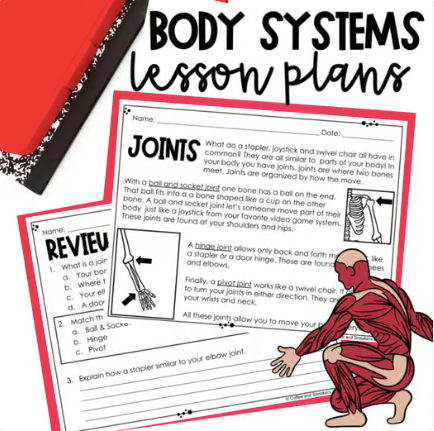
Looking for ready-to-use lessons on this topic? These activities are part of our 3rd Grade Body System Lesson Plans, which include detailed lesson plans, teaching slides with notes, assessments, and many other activities to help students understand the skeletal system, muscular system and the skin.


If you are a 3rd grader teacher in North Carolina you may also like: Hands-On Plants and Soil Activities for Kids.


*As an Amazon Associate, we earn from qualifying purchases. Please don't feel like you need to buy the exact products we've linked—there's a good chance you already have something that will work just as well! These links are simply here as a convenience. Every product we recommend is one we've personally tried and found valuable.

Photo of a student taking a test
June 1, 2026
Learn how to differentiate test corrections for struggling, on grade level, and advanced learners with practical strategies that promote reflection and growth.
Several plant sprouts growing in soil.
May 30, 2026
Engage students in hands-on plant investigations as they explore plant needs, life cycles, and how different soil types affect water and nutrient retention.